Use the photo
Upload the product image, social media screenshot, or a photo you took yourself.
 Colette & CarrieFashion besties · by RemodeBack to chat
 Brand-style search
Amazon’s fashion catalog is deep but hard to search with words. Remode searches the image itself and compares Amazon listings against other retailers and marketplaces.
Search in your browser. The app is available for iPhone.
Start with a photo
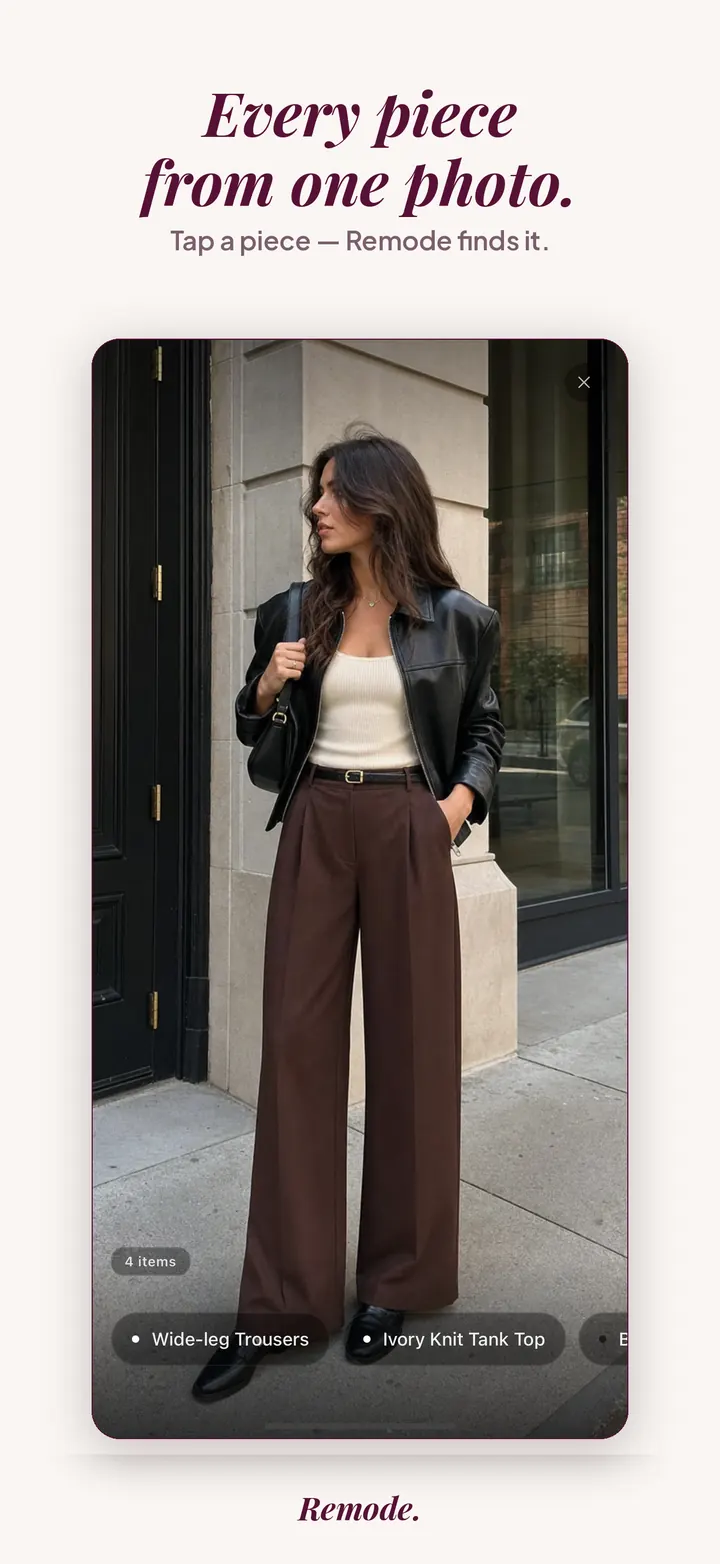
Find a similar piece
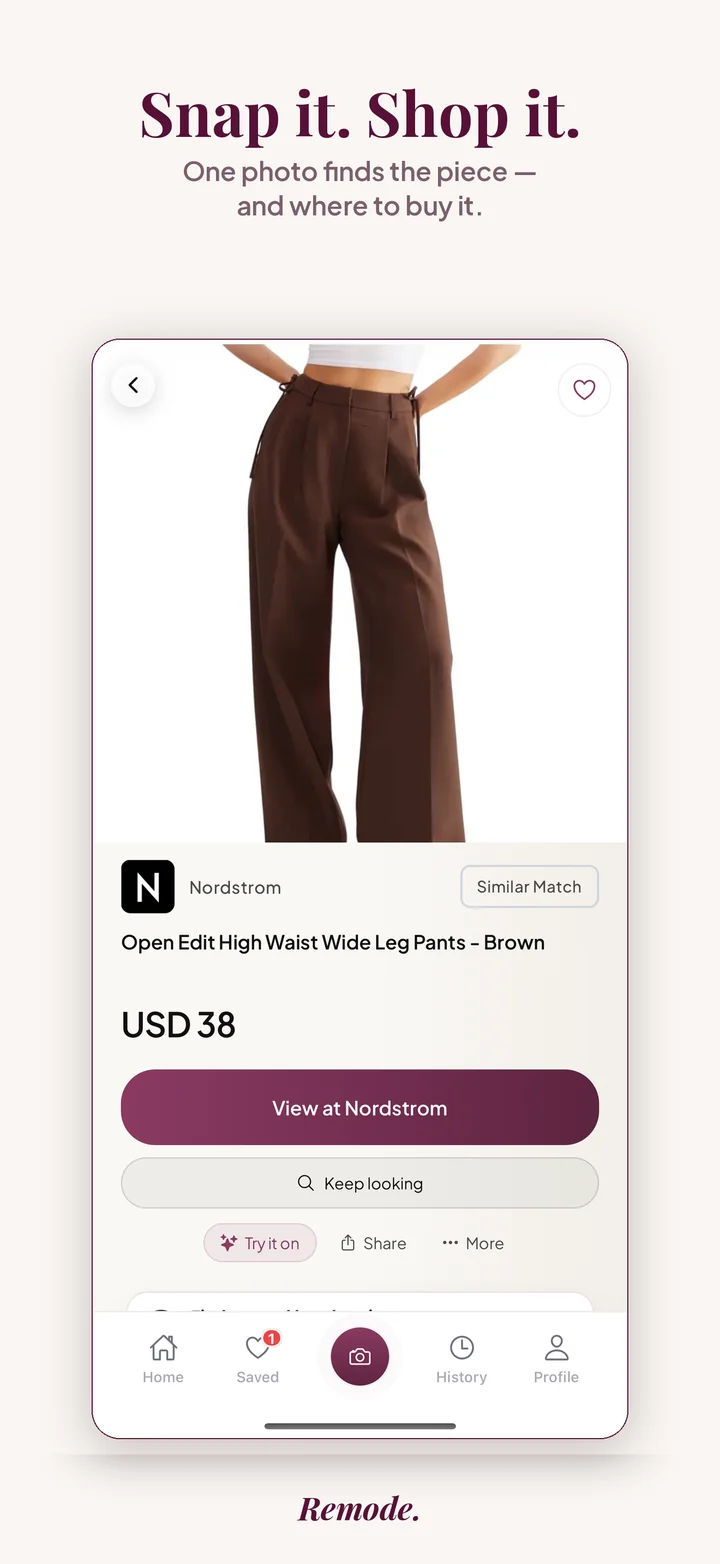
Actual app screens. This result is labeled Similar Match. Prices and availability can change.
Describing a garment in words — the exact neckline, wash, or hardware — is hard. A photo carries all of it, and the results show where the piece or its closest match is sold.
Upload the product image, social media screenshot, or a photo you took yourself.
The same or similar piece may be cheaper or better reviewed at another store; the results put them side by side.
Exact-match and similar badges help you tell an identical product from a lookalike listing.
Amazon fashion is seller-driven: the same garment appears under multiple brand names, photos, and prices, often from the same factory. A visual match cuts through duplicate listings in a way text search cannot. Check the seller and the size chart per listing — they differ even when the photos are identical.
Remode is designed to make the pre-store decision clearer. These signals help you judge whether a result is worth opening.
Is it an exact match, a strong visual match, or a similar alternative?
Compare the listed price with the retailer, shipping, and current availability.
Check similar styles or second-hand when the original is expensive, sold out, or hard to source.
Amazon carries a very deep fashion catalog, and a large part of it comes from marketplace sellers rather than from Amazon itself. The consequence for a shopper is duplication. One garment appears under several titles, several brand names and several sets of photos, often at different prices, and those listings sit beside near-identical items that are not the same product at all.
Titles are written for the search box, not for a person, so a description like “women’s ribbed knit long sleeve crop top” returns pages of results that look alike in a thumbnail and differ in fabric, fit and finish once they arrive. A photo carries the information the title leaves out.
One thing to know up front: Remode earns as an Amazon Associate from qualifying purchases, and ranking is never influenced by commercial terms. An Amazon listing is placed by how well it matches, the same as a route to any other store.
Exact on an Amazon result carries the same meaning as anywhere else: Remode is confident the listing shows the same product. Among marketplace duplicates that confidence is harder to reach, so you will see best visual match more often here than on a single-brand store. Treat a best visual match as a strong lead rather than a confirmed identity, and compare the fabric description, closure and hardware on the listing against your image. Similar is a different product with the same look. Then compare the routes: price at Amazon against price at any other store shown, whether each store ships to your region, and the condition of any second-hand copy. Where several Amazon listings appear, the one with a coherent size chart and consistent photos is the safer open. Remode does not sell anything; the purchase and the return policy belong to the seller.
Some Amazon fashion listings are short-lived private-label items that disappear when the seller changes catalog, and once they are gone there is nothing to match. Others use a photo that does not show the garment they ship, and no image search can see through that. Items sold only to a region your account cannot order from, heavily edited source images and pieces from small labels with no listing anywhere are the remaining gaps. Fall back on the similar results, check the second-hand routes, and save the piece so a later listing gets caught. For a brand-store-first approach, the where-to-buy pillar walks through the alternatives.
Remode searches from the image and surfaces exact or similar products when available, including Amazon listings when they appear in results.
Check the match-quality badge and compare product photos before opening the store. Similar results are labeled as similar, not exact.
No. Remode is an independent app and is not affiliated with Amazon. It searches across many retailers and marketplaces from one photo, and purchases always happen on the store's own website or app.
Sometimes. Remode is an Amazon Associate and earns from qualifying purchases made through its links. That arrangement does not touch ranking; results are ordered by match quality and never by commercial terms, and non-Amazon stores appear alongside Amazon routes whenever they carry the piece.
Marketplace sellers list the same or near-identical garments separately, each with its own title and photos. Remode labels each one honestly, so read the label on each result rather than assuming the first Amazon route is the original. Comparing the size chart and material line on the listings usually settles it.
That is what the store list is for. When a design is carried by other retailers, they appear next to the Amazon route with their own prices, and second-hand listings show up when found. Saving the piece lets Remode hunt in the background for price drops across those routes.
More Remode guides for visual clothing search, screenshot search, and outfit shopping.
Use Remode to compare exact matches, alternatives, and second-hand from one photo.