Use the photo
Upload the event photo, the saved post, or the boutique window shot.
 Colette & CarrieFashion besties · by RemodeBack to chat
 Category search
A dress seen at an event, in a post, or on the street is hard to describe and easy to photograph. Remode searches the image and compares exact and similar dresses across stores.
Search in your browser. The app is available for iPhone.
Start with a photo
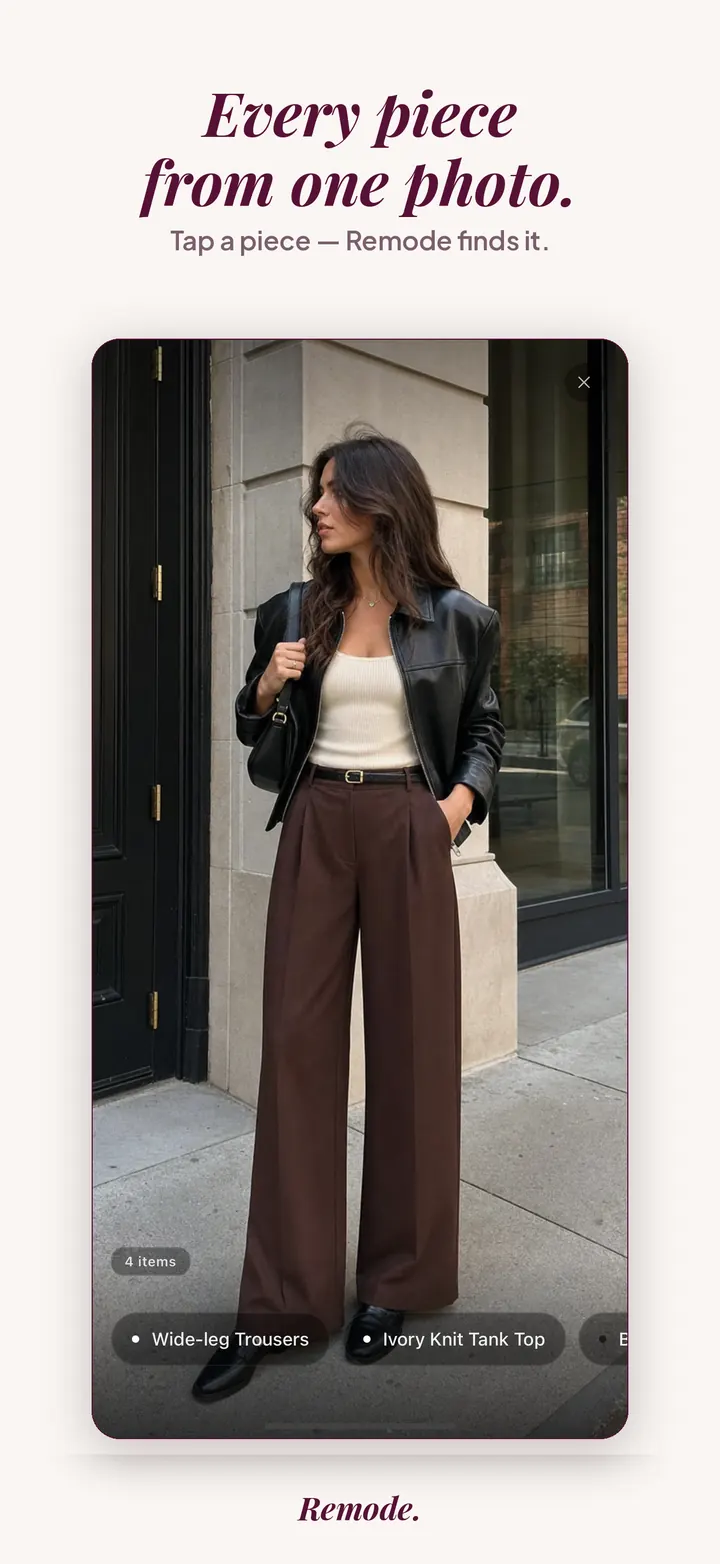
Find a similar piece
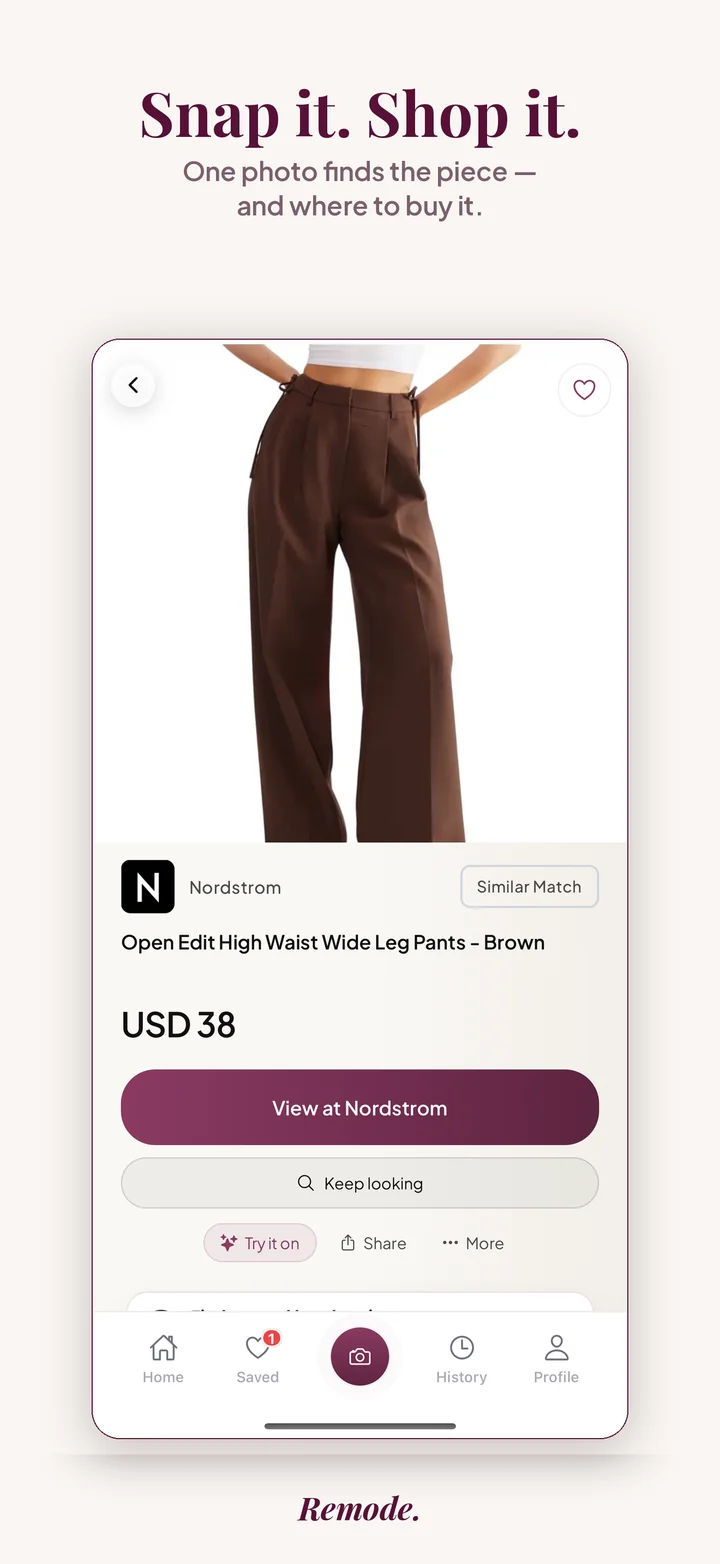
Actual app screens. This result is labeled Similar Match. Prices and availability can change.
Tap a piece — a real recording of Remode finding each item, with prices.
Occasion dresses spread through photos — wedding guests, event posts, creator try-ons. The photo carries the neckline, length, and fabric that words flatten.
Upload the event photo, the saved post, or the boutique window shot.
If the photo shows a full outfit or several people, focus the search on the dress itself.
The same silhouette usually exists at several price levels; results make that visible.
With dresses, the decisive attributes are neckline, sleeve, hem length, and drape — details a photo carries exactly and words describe badly. A text query like “green satin midi” returns thousands of listings; the image pins the exact wrap, cowl, or slip cut and separates exact matches from lookalikes.
Remode is designed to make the pre-store decision clearer. These signals help you judge whether a result is worth opening.
Is it an exact match, a strong visual match, or a similar alternative?
Compare the listed price with the retailer, shipping, and current availability.
Check similar styles or second-hand when the original is expensive, sold out, or hard to source.
A dress is one garment, but the camera records it as several problems at once. Prints come first. A floral in a wide repeat and the same floral in a small repeat are different products, and in a group photo the repeat is hard to read. Under warm evening light a lilac print goes pink and a sage green goes gray.
Length is next. Seated at a table the hem disappears, on stairs it shifts, and on a taller guest a midi reads as knee-length. Many labels sell one cut in mini, midi and maxi under the same name, so the silhouette by itself does not fix the product.
Fabric is the last. Satin, crepe and jersey drape differently, yet in a still frame a matte crepe and a washed silk can look alike. Remode reads the image you give it, so the frame you choose decides what it can be confident about.
For a dress, an exact label still leaves choices open, because a single product page can hold several colors, lengths and sometimes a petite or tall version. Best visual match results are where the careful comparison happens: look at the sleeve, the way the waist is gathered or seamed, and whether the print runs in the same direction across bodice and skirt. Similar results are honest alternatives, worth opening when the date is fixed and the original is gone.
Compare the price across every retailer listed and notice which stores ship to your region, since occasion dresses are often stocked by a single regional retailer. On second-hand listings read the stated condition and the size; a dress worn once is common, and so is an altered hem.
A dress altered by a tailor, a rental gown, a bridal piece made to order or a vintage find has no live product page, so the photo can only lead to similar styles. The same goes for a runway dress that was never produced for retail, and often for a dress from a tiny label sold in a single shop. When the exact dress does not appear, the similar results and the second-hand listings are the honest path, and saving the closest result lets Remode alert you if a matching listing turns up later.
Yes. Remode searches from the image and surfaces exact or similar dresses when available, with stores and prices to compare.
Image search does not need the brand name. If the exact dress is sold online, it can appear; otherwise you get the closest available styles.
Yes. Results include second-hand listings when available — useful for occasion dresses worn once.
It can try. A back view with a distinctive detail such as a tie, a cut-out or a low back can be enough; a plain back gives less to work with, so expect best visual match or similar results more often. If a frame shows the front, upload that as well.
Usually easier, as long as the print is sharp in your image. A distinctive motif is a strong signal for confirming an exact result and helps you spot a lookalike that uses a different flower or scale. Blur or heavy compression removes that advantage.
Search the photo first. When a result is labeled exact, open the store page and look at the color options it lists; many dresses are sold in several colors under one product name. The retailer page shows what else that listing offers.
More Remode guides for visual clothing search, screenshot search, and outfit shopping.
Use Remode to search the photo and compare stores, prices, and resale.