Social screenshots
Use screenshots from Instagram, TikTok, Pinterest, YouTube Shorts, newsletters, or shop pages.
 Colette & CarrieFashion besties · by RemodeBack to chat
 Screenshot search
Saved the look but lost the link? Upload the screenshot and let Remode turn it into detected items, store options, prices, and alternatives.
Search in your browser. The app is available for iPhone.
Start with a photo
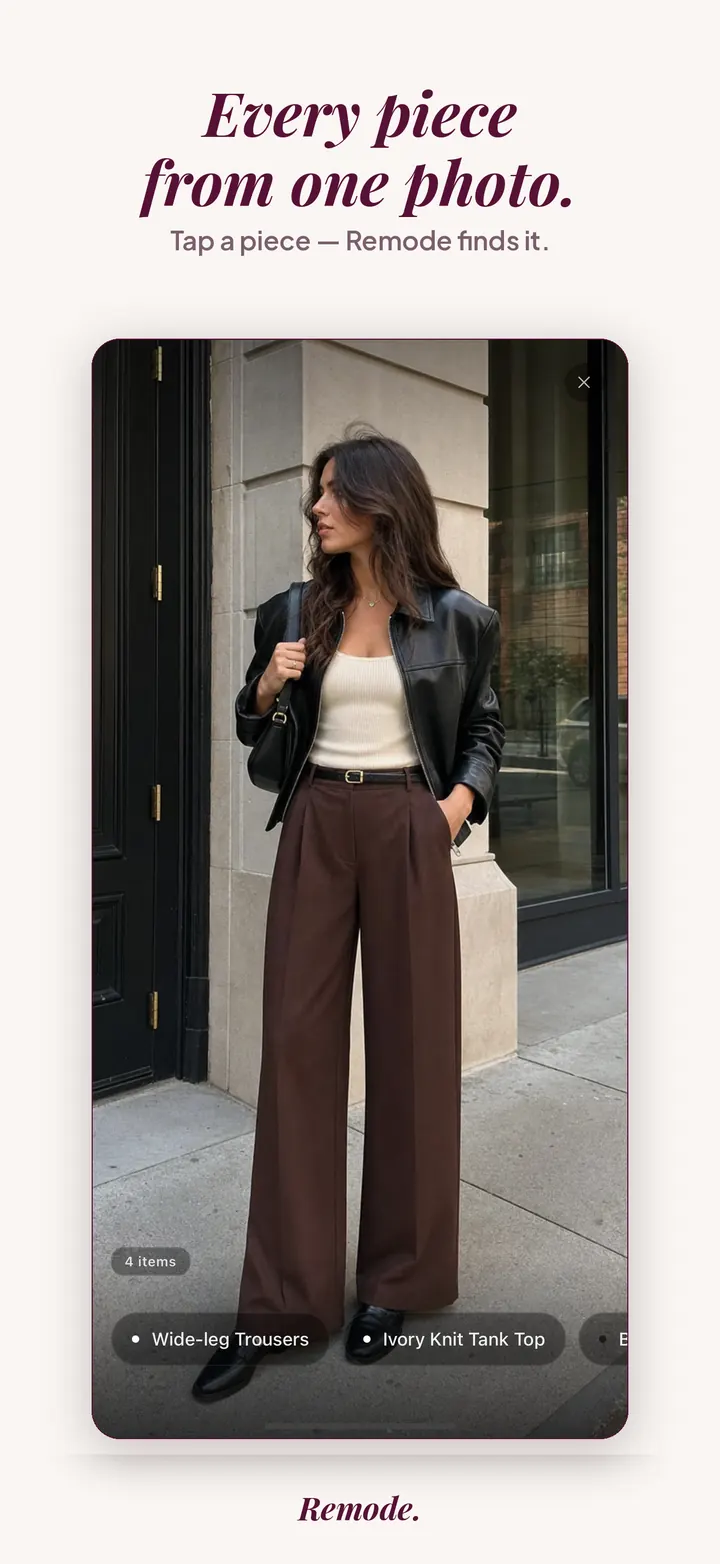
Find a similar piece
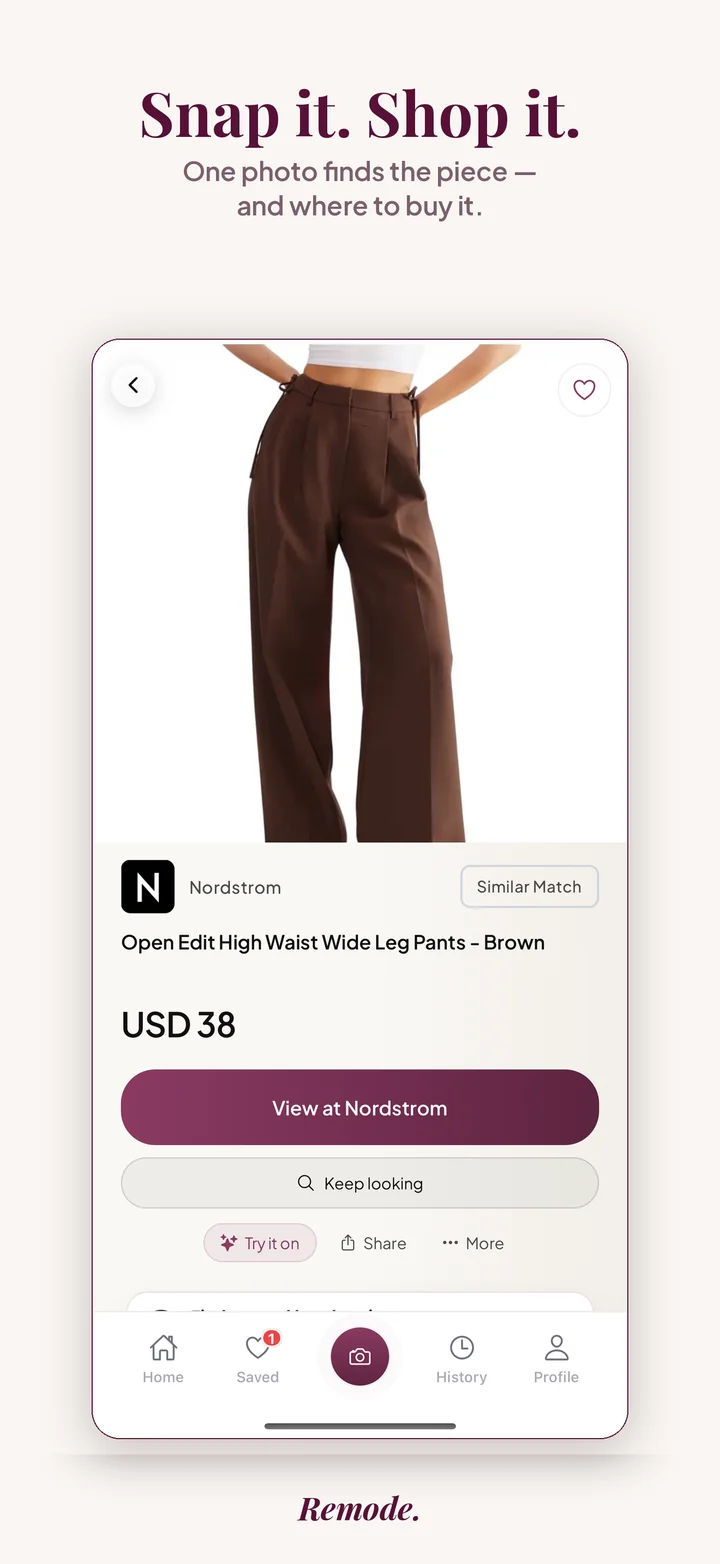
Actual app screens. This result is labeled Similar Match. Prices and availability can change.
Tap a piece — a real recording of Remode finding each item, with prices.
Most fashion inspiration starts in a screenshot, not a product page. Remode is designed for that messy middle: social posts, product crops, and camera-roll references.
Use screenshots from Instagram, TikTok, Pinterest, YouTube Shorts, newsletters, or shop pages.
The image can carry the search when the creator did not tag the item or the link is gone.
See match quality, prices, stores, similar styles, and second-hand routes in one place.
Remode is designed to make the pre-store decision clearer. These signals help you judge whether a result is worth opening.
Is it an exact match, a strong visual match, or a similar alternative?
Compare the listed price with the retailer, shipping, and current availability.
Check similar styles or second-hand when the original is expensive, sold out, or hard to source.
This page covers the general case: any screenshot on your iPhone that shows a piece of clothing, wherever it came from. The guides around it go deeper on a single source each, because each app leaves its own fingerprints on the image.
Read the Instagram guide when the look sits in a feed post, a carousel or a Story. It deals with heavy compression, tagged products that point nowhere, and crops that cut the shoes off. The TikTok guide is about video: choosing a frame where the garment is still, avoiding motion blur, and working with vertical footage where the body fills the frame. Reels get their own page because a Reel behaves like TikTok but is captured inside Instagram, so both sets of problems apply at once. YouTube is different again: long videos, landscape framing, and a garment that may be visible for a few seconds in a haul or a vlog. For Pinterest the challenge is provenance; a pin is often a repost of a repost, and the original store link died long ago. The "what is she wearing" guide is written for the moment you do not know the brand, the creator or even the season, only that you want the piece.
If you are unsure where your image came from, stay here. The steps below work for any screenshot, and each spoke assumes you already understand the basics on this page.
A screenshot is not a product photo. It is a copy of whatever your screen was showing, at your screen's resolution, after the platform had already compressed the original upload. Fine texture goes before anything else: ribbing on a knit, the weave of a tweed, the grain of leather. Then color drifts, because dark interfaces, night mode and warm-tint filters all shift the pixels Remode reads. A navy blazer on a compressed screenshot can land closer to black.
Interface elements are another problem. Captions, like counts, the progress bar of a video, stickers and username overlays sit on top of the outfit. A reply bubble across the hem changes the silhouette the detector sees. Remode detects every fashion piece in the image and lets you pick the piece you want, so overlays rarely block the search entirely, but they do remove evidence that would have separated an exact result from a similar one.
The remaining problem is framing. People screenshot what they were looking at, which is usually the face or the whole scene, not the bag. The bag ends up as a small cluster of pixels in a corner. A search on a small piece can still return matches, though the pool of reliable detail is smaller and the label is more likely to read similar than exact. None of this means screenshots are a poor starting point. It means the capture step deserves a little care, which is what the rest of this guide is about.
The label is the answer to a different question in each case. Exact means Remode is confident the store listing is the same product as the piece in your screenshot. It appears only when the evidence supports it; a compressed or partial image often lacks that evidence, and then Remode says so rather than stretching. Best visual match means the listing that comes nearest to the piece was found, but it could be a different season, a different colorway or another brand's version. Similar is a deliberate alternative: same category and mood, no claim of identity.
Before you open a store from a screenshot search, compare these against the original image: the colorway under neutral light rather than under the creator's filter, the cut at the points a screenshot hides (hem, sleeve length, rise), the retailer's region and whether it ships to you, and the price against other stores in the same list. Remode shows retailer name, price and region-aware store routes side by side so this comparison happens before a checkout page, not after.
Second-hand listings appear when found. For a screenshot from an older post, that is frequently where the actual piece lives, because the season has passed and the retailer has moved on.
Some screenshots hold nothing a search can use. A piece that was custom-made, altered by a tailor or sourced from a vintage rack has no live listing, so the result can be similar at most. Small labels that sell only through direct messages or a market stall leave no product page to find. Heavily edited or AI-generated images may show a garment that never existed in a catalog. And a listing that exists only for a region with no route to you will not appear as a store route, though the piece may still show up as a similar match elsewhere.
In those cases, take the top visual result as a description, note the brand and cut it suggests, and save the piece so a second-hand copy can find you later. For sold-out or discontinued items in particular, the Hunt does the waiting.
Yes. Screenshots are one of the core use cases for Remode.
Yes. Use the picker to choose the garment you want to search first.
Not always. Exact availability depends on the item, but Remode can still show strong visual matches and similar alternatives.
Usually not. Remode detects each fashion piece in the full image and lets you tap the one you want, so the crop happens inside the app. Cropping beforehand can help only when the piece is tiny and the rest of the image is noise, and even then, keep the edges of the garment inside the frame.
Yes, with realistic expectations. A coat with an arm across it or a bag behind a railing still gives Remode a shape, a color and hardware to work with. The visible portion decides how much can be matched; the label will lean toward best visual match or similar when key details are covered.
Because each piece is searched separately and each has different evidence in the image. Shoes often have distinctive soles, logos and shapes that survive compression. A plain knit top loses its defining texture in a screenshot, so Remode will not call it exact without proof, and labels it accordingly.
More Remode guides for visual clothing search, screenshot search, and outfit shopping.
Use Remode to turn saved looks into products, prices, and backup options.