From image to Hunt
You do not need to know the brand or find the product page. A screenshot from TikTok, Instagram, or your camera roll is enough to identify the item and start a Hunt.
 Colette & CarrieFashion besties · by RemodeBack to chat
 Price-drop alerts
Most price trackers need a product URL. Remode starts from a photo or screenshot: find the piece, start a Hunt, and get notified when the price falls or it comes back in stock.
Search in your browser. The app is available for iPhone.
Start with a photo
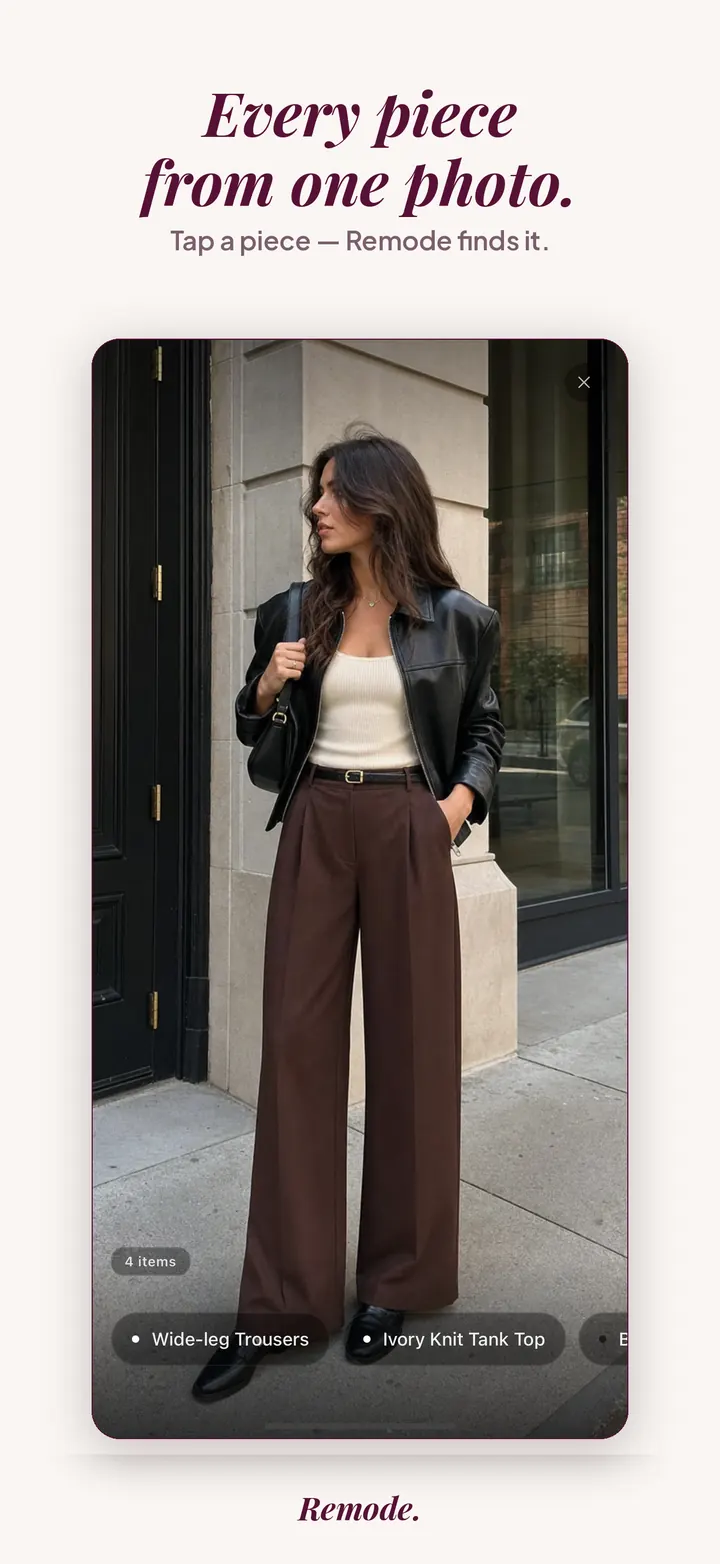
Find a similar piece
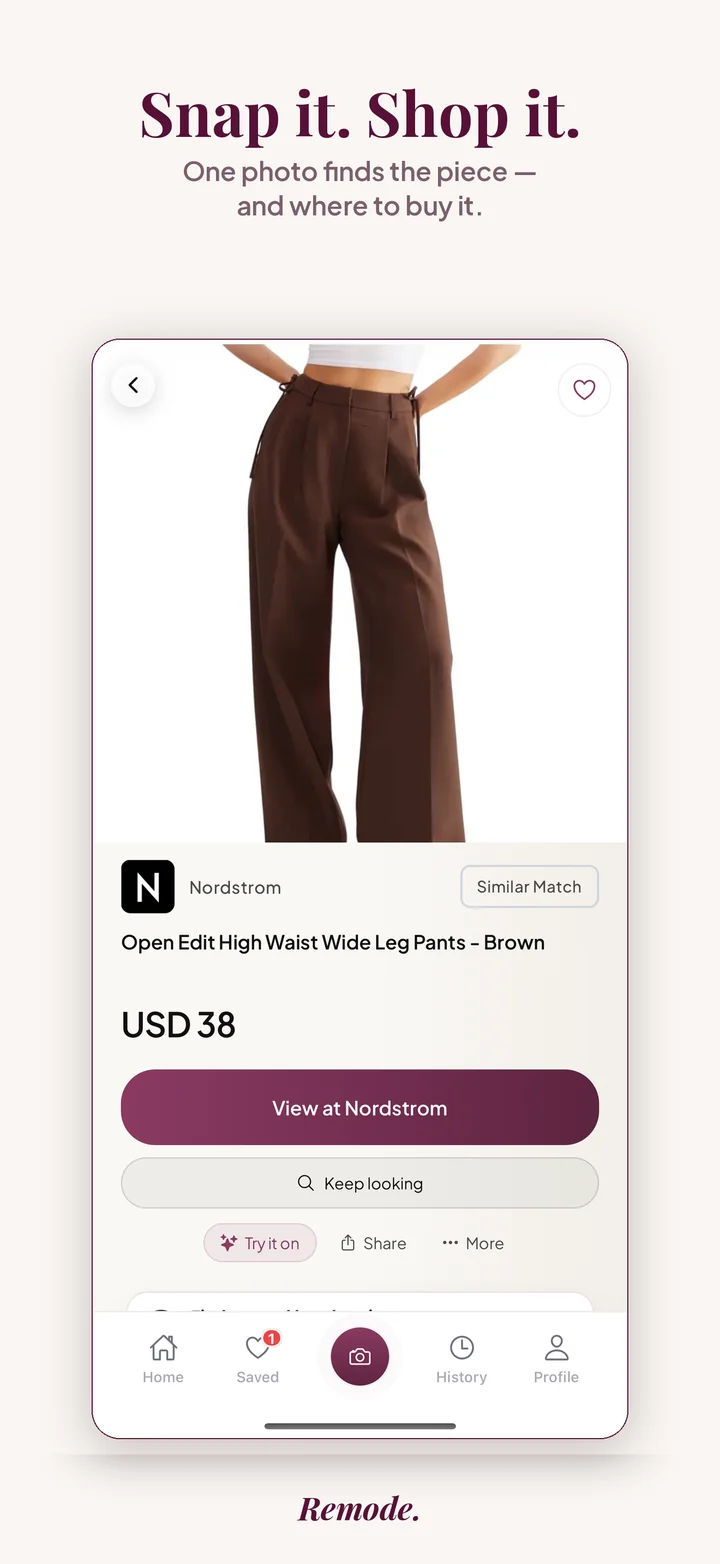
Actual app screens. This result is labeled Similar Match. Prices and availability can change.
Fashion prices move constantly — mid-season sales, outlet transfers, promo codes, and stock swings. If the piece is not urgent, a Hunt is often the difference between full price and a real discount.
You do not need to know the brand or find the product page. A screenshot from TikTok, Instagram, or your camera roll is enough to identify the item and start a Hunt.
Remode keeps checking the item's retailer listings and notifies you when the price falls, so you do not have to keep reopening store tabs.
A Hunt covers availability too: get pinged when a sold-out piece is purchasable again, or check second-hand options in the meantime.
Deal sites show you discounts on things you never asked for. Your Hunts invert that: you pick the exact pieces, and the alerts are only about them.
No feed of random promotions — alerts fire for the items you chose to hunt.
Each Hunt keeps its store comparison, so when the alert comes you can still check which retailer is best.
Stores, currencies, and availability reflect where you shop — Germany, Switzerland, the UK, or the US.
A garment's price follows a season, not a moment. Full price at launch, a first markdown when the next delivery arrives, a deeper cut at the end of the season, and then an outlet transfer or sell-through. Buying early means paying the launch price and securing the size; buying late means paying less and risking that the size is gone. Waiting is a bet that the drop comes before the stock runs out.
That bet is hard to judge by hand. You would need to reopen several product pages, remember each price, and notice when a second-hand copy appears. A Hunt does this in the background: once you save a piece, Remode keeps checking it for a lower price, a new second-hand option or a restock, and tells you when one appears. Looking is free until Remode finds you something real and does not count as a search, so the main risk of waiting is the chance that your size sells out first.
Ask what the piece is for. A coat for this winter can wait through early autumn; a dress for a date already set cannot. Then look at the size run in the results: if the common sizes are still there, the odds of a markdown before sell-out are better than for a piece already down to its edge sizes. A similar result at a much lower price is a signal too, since the original will feel expensive against it once the season turns.
Read a drop alert with the same care as a search result. The alert reports the price found at the check; stores move prices in both directions, and a promotion can expire before you reach the page. Confirm the variant, then the shipping and return terms, then buy. If the drop applies only to a color you would not wear, the piece has not become cheaper for you.
A Hunt only follows what Remode found. A piece identified as similar rather than exact will be tracked as that similar item, so a drop alert would concern the lookalike. Flash sales and coupon codes applied at checkout are not always visible to a background check, and a price that changes between the check and your visit is a real gap that no alert can close. Stores that do not ship to your region are not among the routes, so a drop there goes unreported. If a piece never gets an exact result, use the second-hand and similar routes directly rather than waiting on a Hunt that has nothing to follow.
Yes. Remode lets you start a Hunt for any fashion item you found from a photo or screenshot and sends a notification when its price drops or it comes back in stock. Unlike generic price trackers, you do not need a product URL — a photo of the item is enough.
No. Remode starts from an image: it identifies the item, finds the retailer listings, and tracks from there. If you do have a product link or a clean product photo, that works too.
Yes. A Hunt also covers availability, so a sold-out piece can notify you when it is purchasable again — or you can check the second-hand options Remode surfaces in the meantime.
Remode tracks the retailer listings it finds for your item and is region-aware for shoppers in Germany, Switzerland, the UK, and the US, so alerts reflect stores and currencies relevant to you.
Markdowns tend to cluster when a collection gives way to the next: at the end of a season, and again when outlet transfers begin. Individual retailers also run their own mid-season events. A Hunt removes the guesswork, because it reports the drop when it happens instead of asking you to predict the calendar.
Keep the Hunt running. Restocks are covered alongside price drops, and a returned item often puts a size back on the shelf. In the meantime, check the second-hand listings the Hunt surfaces, since a piece in your size may already be for sale there below the new price.
A Hunt on a saved piece keeps running in the background; you do not need to open the app for the check to run. Looking is free until Remode finds you something real, and a Hunt does not use up searches, so a long-term Hunt for a coat you want next winter costs no searches while it waits.
More Remode guides for visual clothing search, price comparison, and outfit shopping.
Start a Hunt in Remode and let the price come to you.