Multiple items
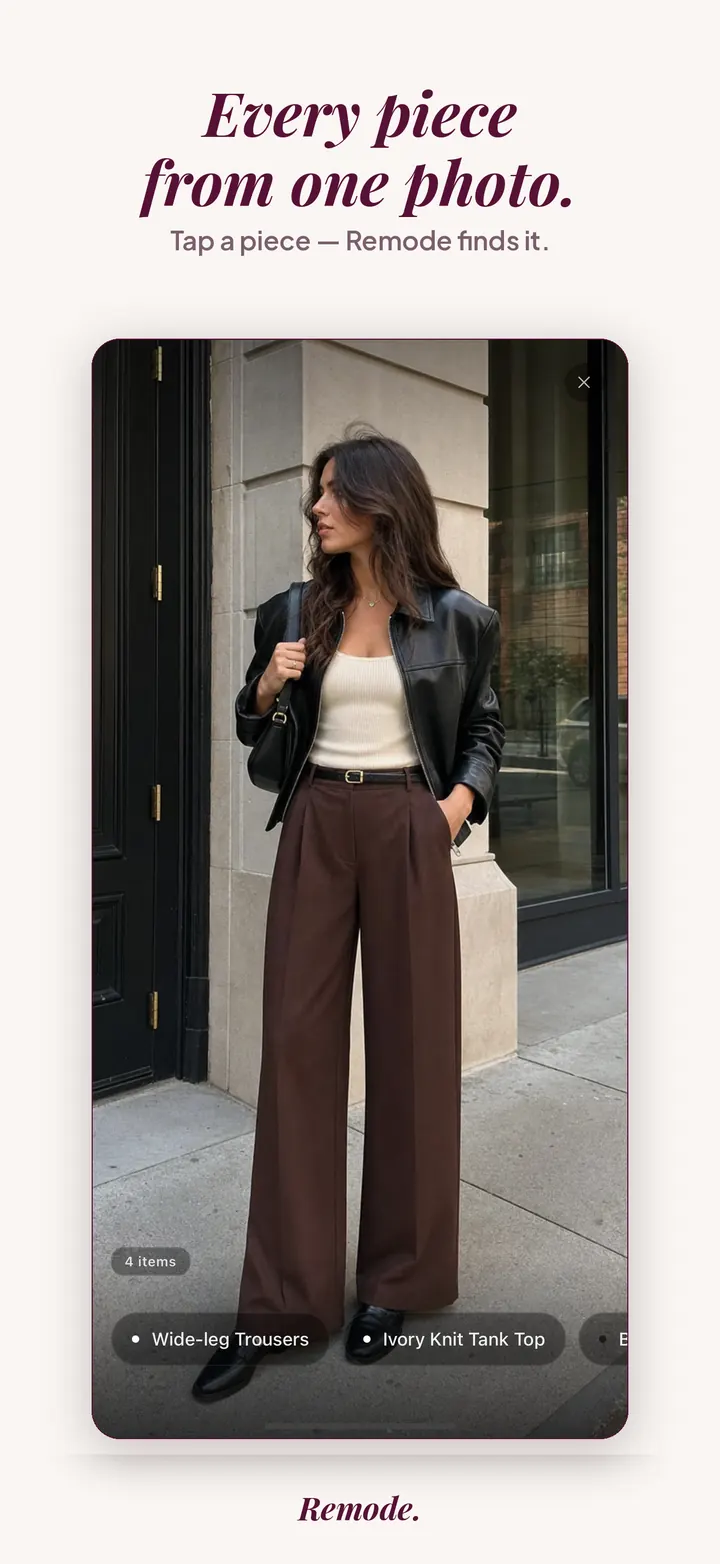
Remode can identify more than one piece in an outfit and let you choose what to search.
 Colette & CarrieFashion besties · by RemodeBack to chat
 Clothing recognition
Recognition is only useful when it leads somewhere. Remode identifies garments and keeps the next steps close: picker, matches, stores, prices, and try-on.
Search in your browser. The app is available for iPhone.
Start with a photo
Find a similar piece
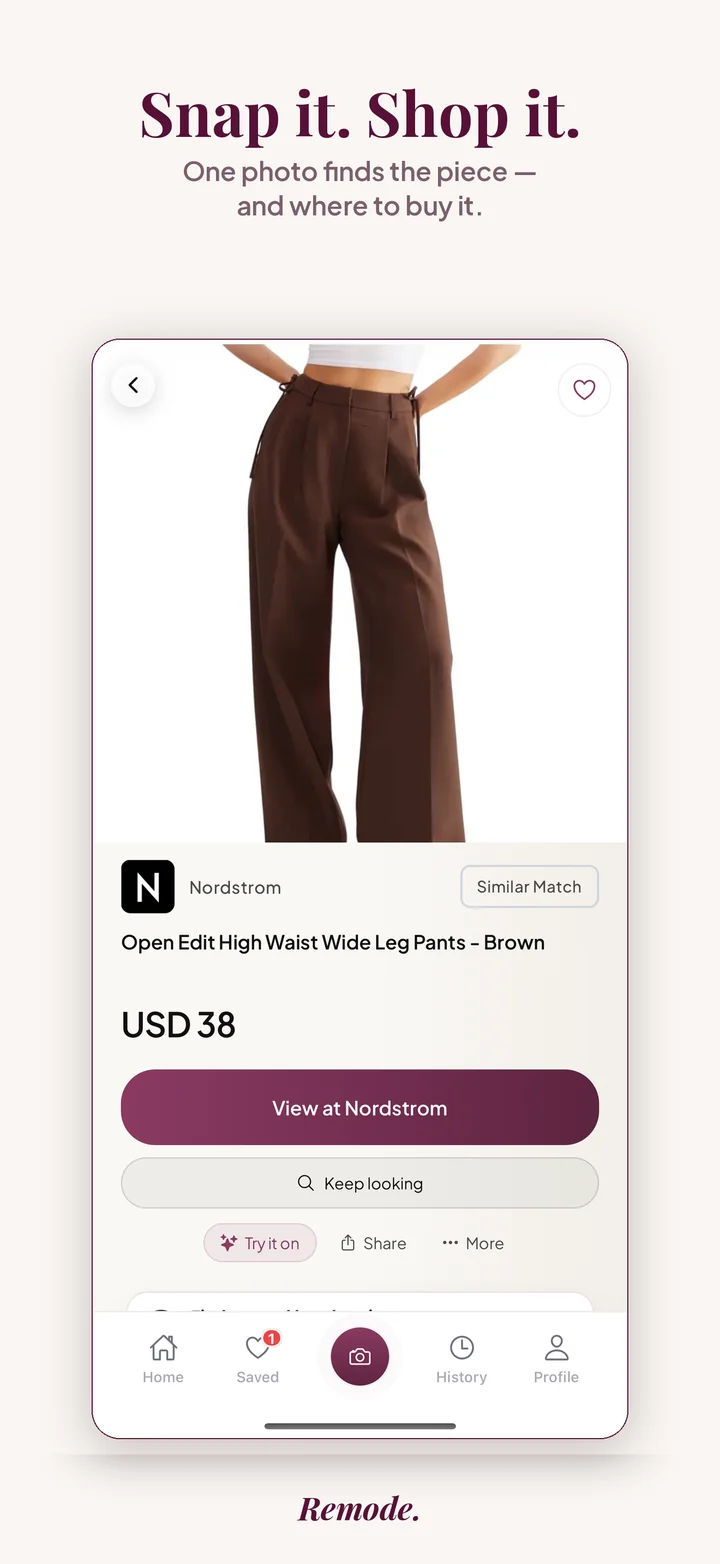
Actual app screens. This result is labeled Similar Match. Prices and availability can change.
A label like 'brown trousers' is not enough. The useful answer tells you which product, which store, what price, and what alternatives are worth checking.
Remode can identify more than one piece in an outfit and let you choose what to search.
Results are easier to evaluate when exact, best visual, and similar matches are separated.
Save, compare, try on, or visit the retailer once a result looks right.
Remode is designed to make the pre-store decision clearer. These signals help you judge whether a result is worth opening.
Is it an exact match, a strong visual match, or a similar alternative?
Compare the listed price with the retailer, shipping, and current availability.
Check similar styles or second-hand when the original is expensive, sold out, or hard to source.
Identifying clothes is a layered problem. The shallow layer is category: a detector can tell a trench coat from a bomber, a loafer from a derby, a tote from a crossbody, and it does so from silhouette, proportion and how the fabric falls. That layer is quick and rarely wrong on a clear photo.
The deep layer is identity. Whether this trench is a particular product from a particular brand depends on small evidence: the shape of the storm flap, the lining color showing at the cuff, the buckle hardware, a monogram on a button, or a logo that is only a few pixels wide in a screenshot. Much of that evidence is missing or blurred in a real-world photo, so identification stops at a strong guess. Remode marks the difference plainly. Only when the evidence supports the same product does the result say exact; a good-looking guess is labeled best visual match, and a category-level result is labeled similar.
For a recognition task the label is the whole answer. Exact tells you the identification is complete: brand, product and, as far as the listing shows, the variant. Best visual match tells you the category and style were identified but the product was not confirmed; treat it as a lead, and check the store page for the detail your photo could not show, such as the back of the garment or the inside label. Similar tells you identification reached the category and stopped there.
Before opening a store, look at the region the result is routed to, because the same piece can carry a different name or price by market. Also note whether the listing is new or second-hand, since a pre-owned listing may be an older version of the same design.
Some garments carry no identity to recover. Unbranded basics from a market, a hand-knitted sweater, a vintage piece with the label cut out or a garment altered beyond its original cut can be categorized but not identified, and the result will say similar. Tiny brands that sell through direct messages or a stall, without product pages, leave nothing for the search to confirm. Heavily edited or generated images, extreme compression and frames where the piece is mostly hidden defeat detection outright. For all of these, the realistic path is to shop the similar results or to save the piece and let Remode keep hunting until a listing appears.
Yes. Upload a photo or screenshot and Remode can detect garments in the image.
No. Identification is the first step. Remode then helps with matches, prices, stores, second-hand options, and try-on.
Remode is focused on fashion items. Results depend on visibility and available matches.
Sometimes. Detection can usually still find the piece and its category in a soft image, but identity depends on small details that blur destroys first. Expect a best visual match or similar results rather than exact. If the source is a video, a sharper frame is usually a moment away and worth the second screenshot.
It can when the design itself is distinctive: a signature cut, a recognizable print, particular hardware or a well-known colorway. Plain basics with no visible branding are a different case; they can be matched to look-alikes but rarely confirmed as a specific product, and Remode will say so instead of guessing.
It depends on whether the piece still has listings anywhere. Older designs that are resold on second-hand marketplaces can be found and are shown as second-hand options when Remode finds them. A vintage garment that has no online listing at all can be categorized and matched to similar styles, but not identified as a product.
More Remode guides for visual clothing search, screenshot search, and outfit shopping.
Use Remode when knowing the clothing category is not enough.