Use the original look
Start with the image that captures the style you want.
 Colette & CarrieFashion besties · by RemodeBack to chat
 Similar styles
When the exact item is too expensive, sold out, or impossible to identify, Remode helps you find alternatives that keep the look.
Search in your browser. The app is available for iPhone.
Start with a photo
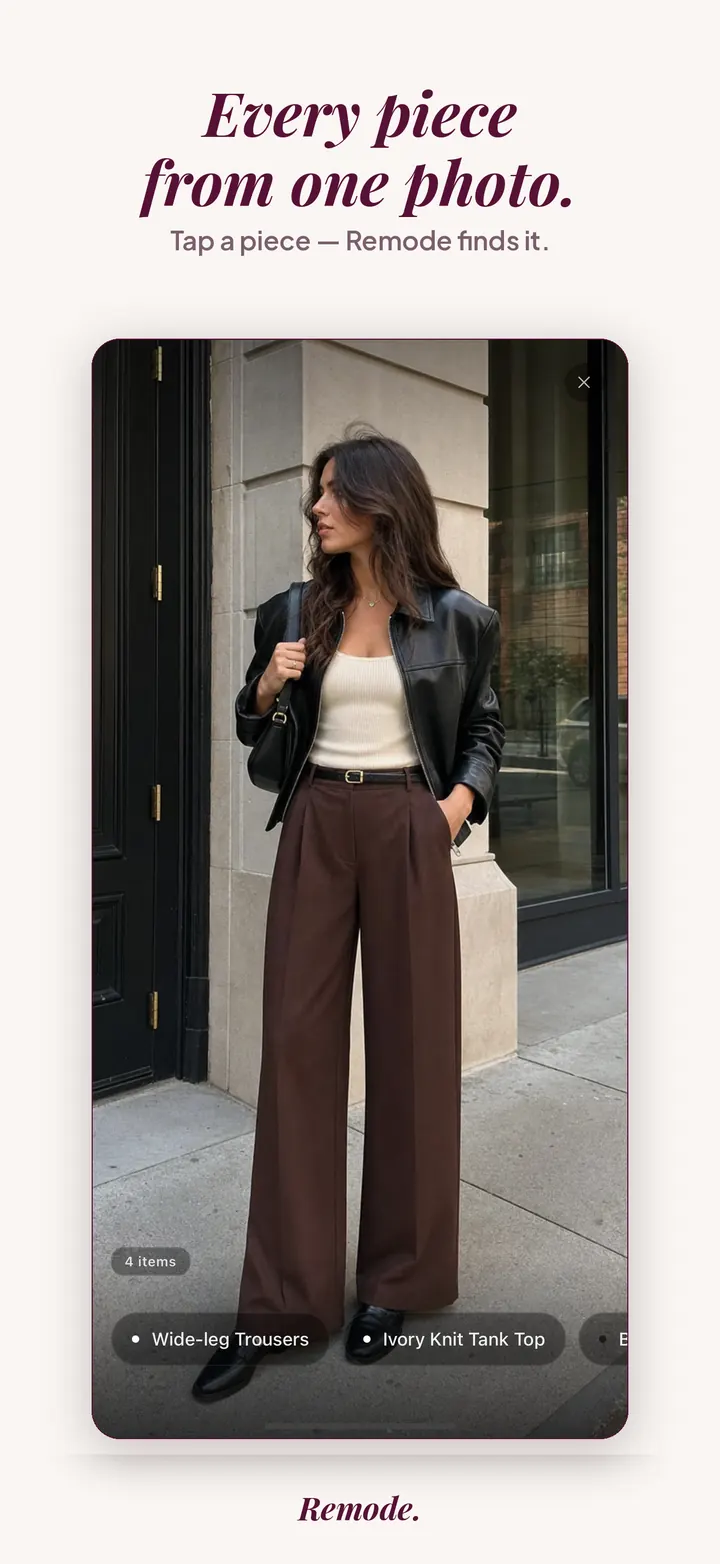
Find a similar piece
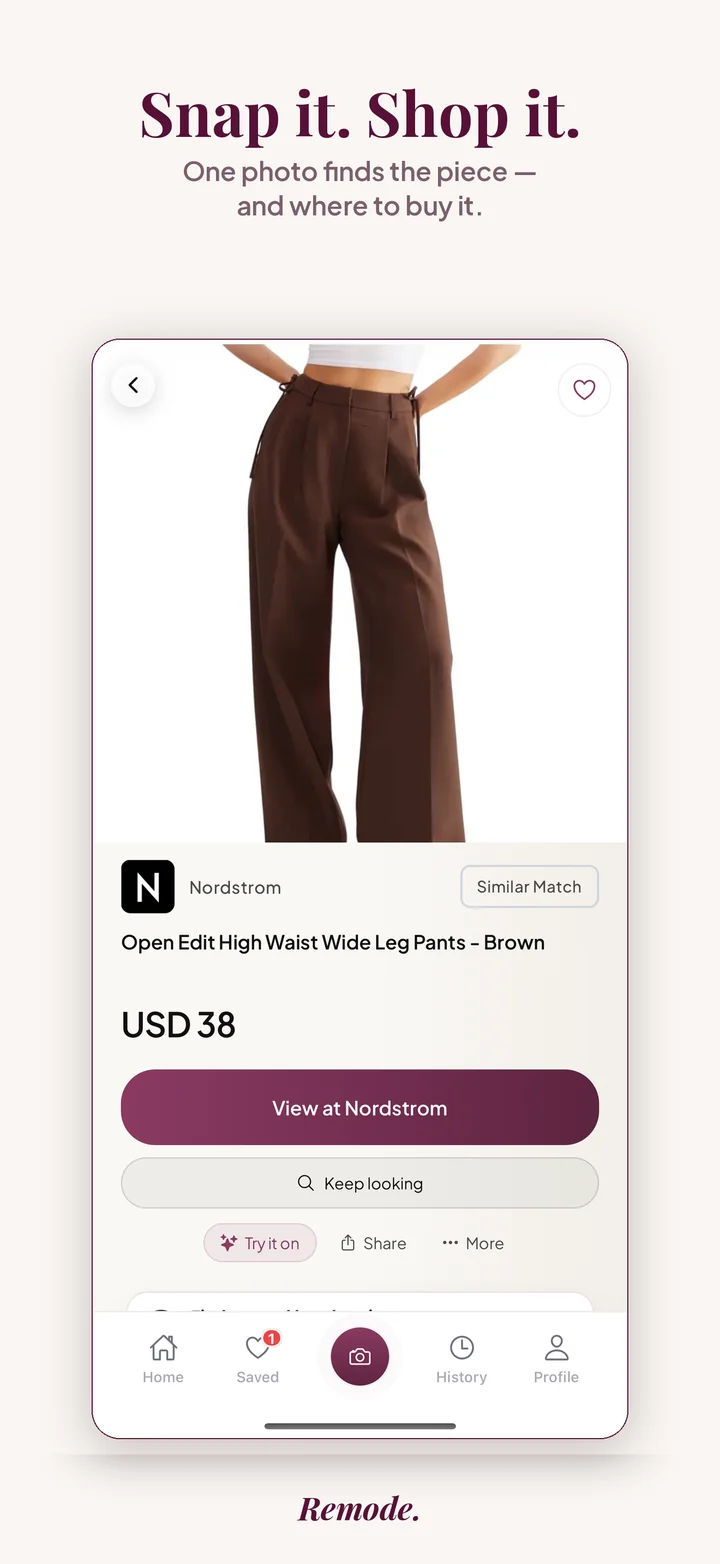
Actual app screens. This result is labeled Similar Match. Prices and availability can change.
A similar item should be treated as an alternative, not a fake exact match. Remode keeps that distinction clear.
Start with the image that captures the style you want.
Compare shape, color, fabric, neckline, length, and details.
A lower price, better availability, or second-hand option can make the alternative stronger.
Remode is designed to make the pre-store decision clearer. These signals help you judge whether a result is worth opening.
Is it an exact match, a strong visual match, or a similar alternative?
Compare the listed price with the retailer, shipping, and current availability.
Check similar styles or second-hand when the original is expensive, sold out, or hard to source.
Not every search is a hunt for the original. Sometimes the original is the wrong purchase: it costs more than the piece is worth to you, it sold out before you saw it, the only store carrying it does not ship to your region, or it belongs to a runway collection that never reached retail. In those situations a similar result is not a consolation prize; it is the practical outcome.
The reference image still does its job, because it carries the things you responded to, a boxy shoulder, a washed indigo, a specific collar, and Remode can look for pieces that share them. What changes is your posture. With an exact result you verify; with a similar result you evaluate, and the evaluation is about whether this alternative delivers the same effect on your body and in your wardrobe. Remode labels these results similar so you never mistake the evaluation for a verification. That label is the point: it tells you which mode to switch into. For the opposite case, confirming that a listing is the same product, read the exact match guide.
Start with silhouette. Compare the overall shape to your reference: where the shoulder sits, how wide the leg falls, whether a dress is fitted at the waist or drops straight. A wrong silhouette cannot be rescued by a right color. Then fabric. Read the composition line on the product page, not the thumbnail; a linen-look viscose and a true linen hang and crease differently, and that difference is the look. Then color. Screens distort shade, so compare the retailer's product image against your reference under the same conditions and read the color name for clues such as ecru versus optic white. Details come last. Buttons, topstitching, pocket shape, hem finish, hardware color: these decide whether a piece reads as the same idea or as a distant cousin. On the store card, set the price against the new price of the original when one exists, and treat a second-hand version of the original as a competitor to the alternative, not an afterthought.
Similar search works on visible form. It cannot find alternatives to qualities that do not show in a photo: a specific weight of denim, a lining, the cedar smell of a vintage coat. It also struggles when the reference is itself heavily edited, because the shade and proportions Remode compares against are no longer real. For a very distinctive piece, a sculptural collar or a hand-painted print, the similar results will share the category but not the character, and you should expect that. If region is the only problem, check the region routes on the exact result before anything else; a store that ships to you may exist, and the similar search becomes unnecessary. For a sold-out original, the sold-out clothes guide explains how to wait for a restock, and the dupe finder guide covers deliberate copies.
Yes. Remode can surface similar styles when exact matches are unavailable or not the best option.
They vary. Use the image, match label, store, and details to judge each result.
Yes. It is useful when you want the same vibe rather than the exact item.
No. Ranking is never influenced by commercial terms, so a similar result is not placed higher because a retailer pays more. How close a piece really is remains your judgment, made on silhouette, fabric, color, and details, because a thumbnail can look near while the product page reveals a different material or length.
Yes, and Remode will label it similar rather than exact, because it is a different product. Before deciding, compare its price against any second-hand listings for the original; a used original at a lower price is often the alternative that ages well. The dupe finder guide goes deeper on judging copies.
Check the region-aware store routes on the result first; Remode shows stores that ship to you. If none exist, similar results from retailers in your region are the practical route, and saving the original lets Remode alert you if a second-hand listing or a restock appears later.
More Remode guides for visual clothing search, screenshot search, and outfit shopping.
Upload the reference image and compare alternatives with price and store context.