Item detection
Find the garments in the image and focus the search on the piece you want.
 Colette & CarrieFashion besties · by RemodeBack to chat
 clothes finder
Remode turns outfit photos into structured fashion results: detected pieces, exact matches when available, similar styles, prices, stores, second-hand options, and virtual try-on.
Search in your browser. The app is available for iPhone.
Start with a photo
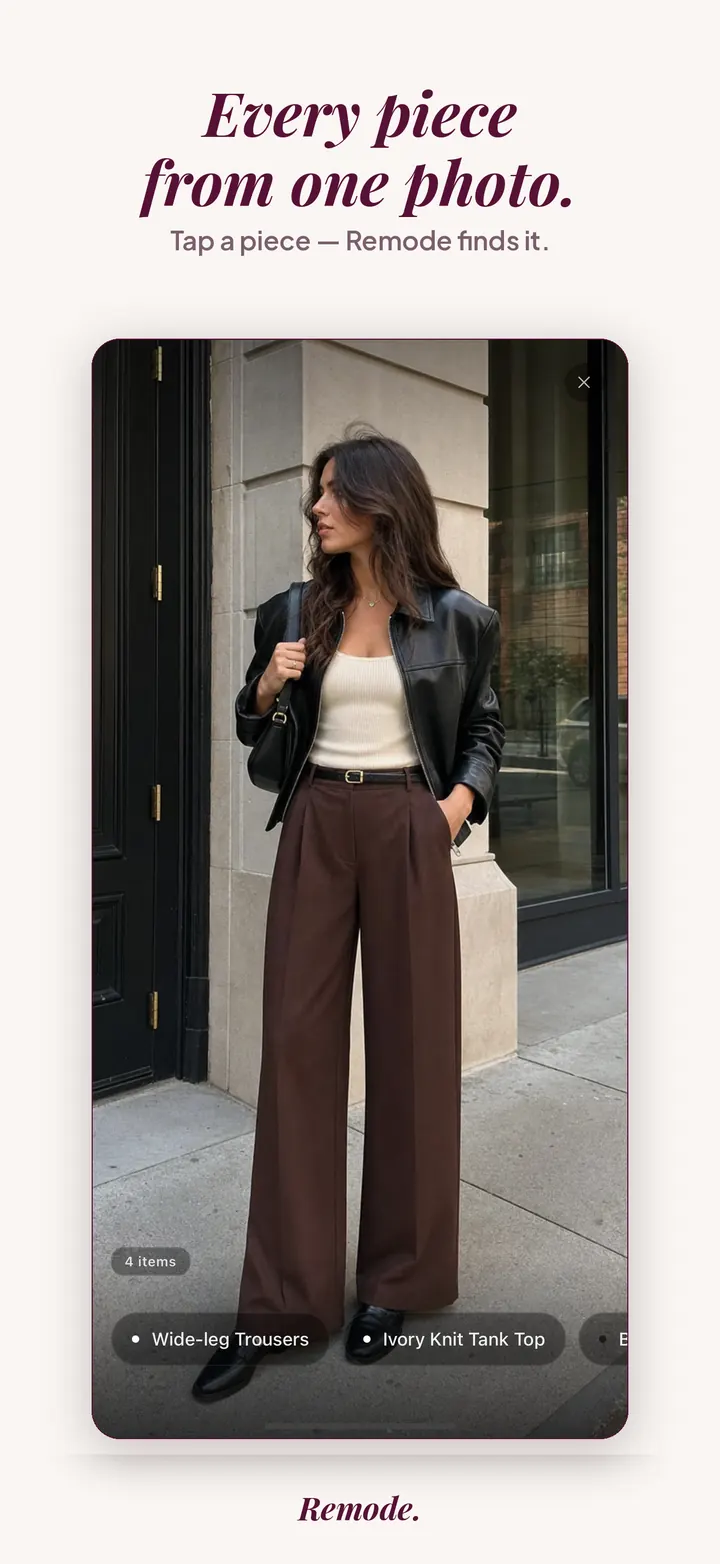
Find a similar piece
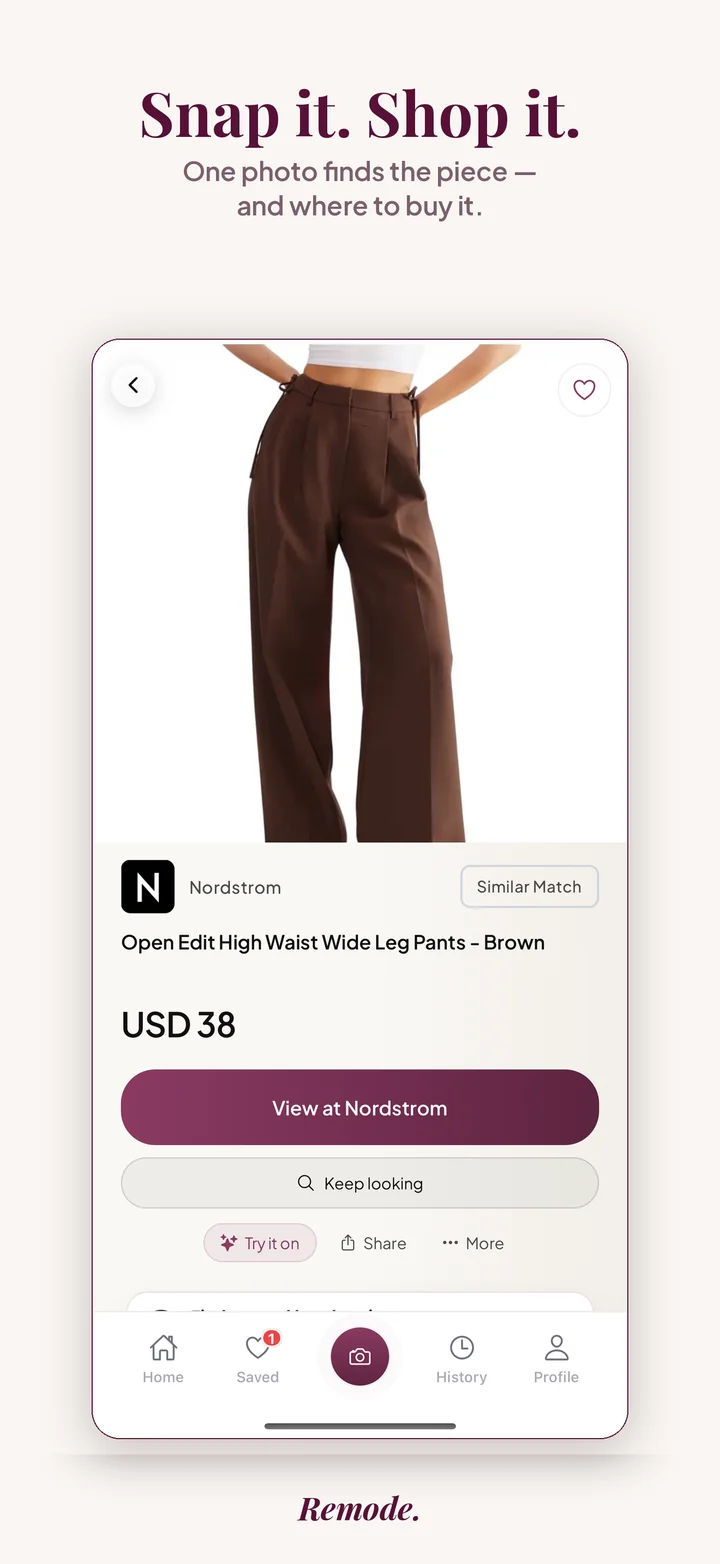
Actual app screens. This result is labeled Similar Match. Prices and availability can change.
The best clothes finder should not stop at a label like 'brown trousers'. It should help you decide which match is worth buying.
Find the garments in the image and focus the search on the piece you want.
Separate exact matches, strong visual matches, and similar alternatives.
See retailer options and compare before opening the store.
Remode is designed to make the pre-store decision clearer. These signals help you judge whether a result is worth opening.
Is it an exact match, a strong visual match, or a similar alternative?
Compare the listed price with the retailer, shipping, and current availability.
Check similar styles or second-hand when the original is expensive, sold out, or hard to source.
The phrase promises magic, so it helps to be exact about the work. In Remode the detection has narrow jobs. It finds the fashion pieces in your picture and draws a region around each of them. It turns the piece you tap into a description rich enough to search product listings: category, cut, color, pattern, visible hardware and any legible branding. It then weighs each candidate listing against that description and decides whether the evidence supports calling it the same product or only a close relative.
What it does not do is decide for you. A clothes finder ends at a shortlist with honest labels, a price and a store route; the judgment about fit, budget and whether the colorway is right stays with you. Keeping that boundary clear is what separates a finder you can trust from one that confidently points at the wrong garment.
Read the finder's output as a stack of evidence. An exact label means the piece in your photo and the listing are, in Remode's judgment, the same product. That is when price comparison across stores makes sense, because you are comparing like with like.
A best visual match means the finder found a listing that looks right but could not confirm its identity. Before buying, compare a detail your photo shows clearly, such as a pocket shape, a placket or the wash on a pair of jeans, against the product photos on the store page.
Similar results are alternatives, and the useful comparison there is not to the original but between them: which is in stock in your size, which ships to you, and which price you are actually willing to pay. Second-hand listings can sit in any of these groups and need a condition check before their price means anything.
A finder can only point at products that exist as listings. Pieces made once, bought at a flea market, altered by a tailor or sold by a label with no product pages will come back as similar, and that is the correct answer rather than a failure. Heavily edited images, computer-generated fashion renders and frames where the garment is mostly covered give the detector too little to describe. If the piece is real but only sold in a country that does not ship to you, the store list will be empty for that reason. In those cases, save the piece and let the Hunt do the waiting, or shop the similar shortlist.
It is an app that uses an image to identify clothing and find matching or similar items online.
Yes. The picker lets you choose which item from the outfit to search.
No. Remode also surfaces second-hand options where available.
No. Detection works from the shape and surface of the piece, and a logo is only one of several clues. It does raise the odds of an exact label, because a legible brand mark is strong evidence of identity. Without it you will more often see a best visual match, which is still a useful lead.
Partly. Remode offers a Chrome extension for shopping on a computer, and anyone can upload a picture at remode.app/try/ in a browser and try it free with no account. The app itself is iOS only, and saved pieces with background Hunts are part of the app experience.
A free account in the app gives you a daily allowance of full-featured searches. Remode Hunt costs the price shown in the App Store in your currency and gives you more searches and Try-on on supported items, up to a fair-use limit of 400 per month. One-time packs are also available at the App Store price: the Essential Pack with 15 searches and the Curator Pack with 30.
Remode is available in ChatGPT and to compatible chat assistants over MCP at mcp.remode.app — assistants can call the Remode tool directly.
More Remode guides for visual clothing search, screenshot search, and outfit shopping.
Use Remode when you want clothing results that are clear enough to compare and buy.